


In 2025, off-grid living is surging as households seek energy independence amid rising electricity costs and frequent disruptions. Picture powering your remote home or tiny home with a solar power system, free from utility bills and grid outages. Off-grid solar power systems offer a sustainable path to self-sufficiency, whether you’re in a rugged outback or a coastal retreat. This guide explores how to go off grid with solar, spotlighting federal government solar and battery rebates, top brands like Deye, and practical tips for thriving off the grid. If you’re searching for “best off-grid solar systems”, “off-grid solar for beginners”, or “solar battery storage rebates”, you’re in the right place. For expert advice and tailored solutions, visit SolarLinkAustralia.com.au for comprehensive guidance on your off-grid journey.
What Is Off-Grid Living, and Why Choose Solar?
Off grid living means disconnecting from public utilities to independently manage energy, water, and waste. It’s not just for survivalists—eco-conscious families, retirees, and remote workers are embracing off-grid solar systems for resilience and cost savings. With abundant sunshine and a booming off-grid solar market projected to grow rapidly, solar is the cornerstone of this lifestyle. Unlike grid-tied setups, off-grid solar power relies on batteries for nighttime or cloudy days, perfect for remote or variable climates.
Why Go Off-Grid with Solar?
- Energy Independence: Stay powered during storms or grid failures.
- Cost Savings: After upfront costs, enjoy free electricity, with solar rebates cutting payback to ~5-8 years.
- Eco-Friendly: Slash your carbon footprint by up to 90%, supporting net-zero goals.
- Resilience: Thrive in unpredictable conditions with self-reliant power.
For those new to off-grid solar for beginners, start by assessing energy needs (e.g., lights, fridge, water pump). Use online solar calculators to estimate wattage based on your location’s solar irradiance, from sunny deserts to cloudy coasts. For personalized system sizing, contact Solar Link Australia for expert advice.
Anatomy of an Off-Grid Solar Power System
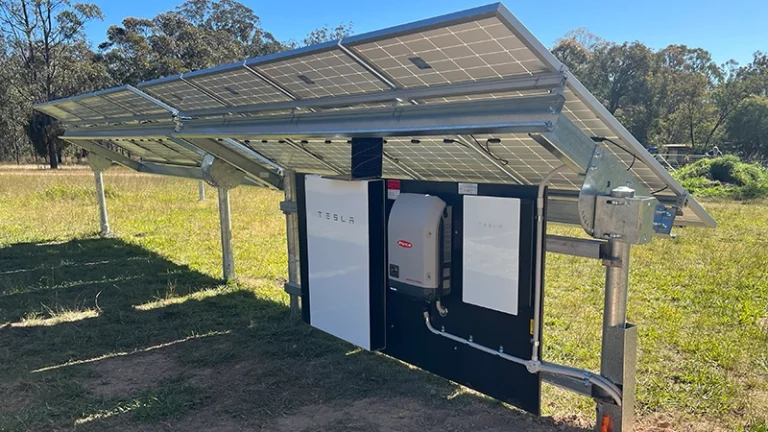
A reliable off-grid solar power system balances components for efficiency in harsh conditions. Here’s a breakdown, featuring top brands like Deye for off-grid solar setups:
- Solar Panels: Harnessing the Sun
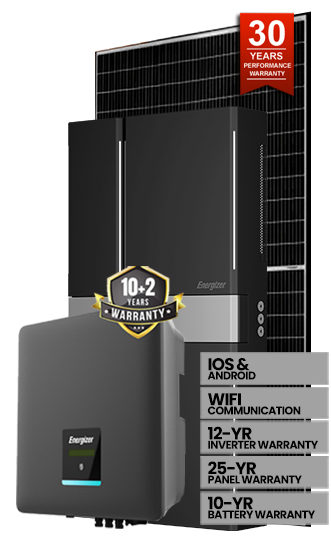
Solar panels convert sunlight into DC electricity. Monocrystalline solar panels lead with 22%+ efficiency, ideal for off-grid setups. A 5kW array generates 20-25kWh daily in sunny regions.Top Brands: Choose SunPower for premium durability, Jinko, Risen or Trina Solar for cost-effective performance, REC & TINDO which are precision made & are manufactured in Singapore and Australia respectively. All withstand heat, salt, and dust.
All these Solar Panel brands have 25-year warranties for long-term off-grid solar reliability. Visit SolarLinkAustralia.com.au to explore top panel options.
- Batteries: Storing Solar Energy
Robust solar battery storage is essential for off-grid living. While lead-acid batteries are cheaper, lithium-ion (LiFePO4) batteries dominate with 10 x lifespan and 90% depth of discharge—perfect for remote installs. A 10-50kWh bank powers essentials like air conditioners during humid summers.Top Brands: Deye offers high-capacity, reliable LiFePO4 batteries with seamless integration for off-grid systems, ideal for consistent power in variable climates. Dyness delivers cost-effective LiFePO4 packs with robust performance. These ensure power during short winter days. Learn more about battery options at SolarLinkAustralia.com.au.
- Inverter: Powering Your Home
Inverters convert DC to household AC. Pure sine wave models support sensitive electronics, while hybrid inverters double as chargers for backup generators. Deye Inverters: A standout for off-grid solar systems, Deye’s SUN series boasts 97% efficiency, dual MPPT trackers, and seamless LiFePO4 battery integration. Ideal for homes or remote sites, Deye inverters handle peak or inductive loads (e.g. pumps and power tools) with a 10-year warranty and app-based remote monitoring.Other Top Picks: The Solis Solarater Series excels in customizable, rugged inverters for off-grid reliability, while SMA Sunny Island is renowned for its robust performance and scalability, perfect for heavy-duty off-grid setups. For Deye, Solis and SMA inverter specs and quotes, visit SolarLinkAustralia.com.au.
Installation costs for off-grid solar kits range from $15,000-$40,000. Connect with trusted professionals at SolarLinkAustralia.com.au for seamless installation.
Federal Government Rebates for Solar and Battery Storage
Upfront costs for off-grid solar power systems can be daunting, but federal incentives make it affordable. The Small-scale Renewable Energy Scheme (SRES) offers rebates for solar panels via Small-scale Technology Certificates (STCs), while the Cheaper Home Batteries Program (launched 1 July 2025) slashes battery costs. Administered by the relevant regulatory body, these make off-grid solar panels and solar battery storage accessible for homes, businesses, and remote properties.
Breaking Down the Rebates
- Solar Panels Rebate: Under SRES, STCs are based on your system’s output until 2030, valued at $35-$40 per STC in 2025. Eligible for any residence (primary or secondary).
- Battery Storage Rebate: The Cheaper Home Batteries Program offers ~30% off installation—up to $372 per kWh for batteries between 5kWh and 50kWh. Issued as 9.3 STCs per kWh, a 20kWh Deye battery could save ~$7,000, stackable with solar STCs. Available through 2030 for new or existing setups by approved installers.
Maximizing Efficiency: Tips for Off-Grid Solar Living
Efficiency is key for sustainable off-grid living. Conduct an energy audit: LED bulbs, Energy Star appliances, and passive solar design (sun-facing windows) cut usage by 50%. For off-grid solar homes, prioritize:
- Load Management: Use monitors to track consumption; shift non-essentials to peak sun hours in high-UV regions.
- Backup Options: Pair with a diesel generator for cloudy periods.
- Maintenance: Clean panels annually to remove dust or salt; check batteries & Inverter regularly. Quality gear lasts 25+ years.
Challenge: Solar yields can drop 70% in winter or wet seasons, requiring oversized arrays. For efficiency tips and system optimization, visit SolarLinkAustralia.com.au.
Success Stories: Off-Grid Solar in Action
The Johnsons, a family who went off-grid in 2025, use an 12kW Deye inverter system with 30kWh Deye battery storage, boosted by SRES rebates. Their 230 sqm home stays powered year-round, saving $3,000 annually. A 2025 industry study shows solar households save ~30% post incentives. Discover more success stories and system options at SolarLinkAustralia.com.au
The Future of Off-Grid Solar: 2025 and Beyond
With the Cheaper Home Batteries Program driving adoption, off-grid solar systems are more accessible than ever. While SRES STCs phase down post-2030, regional incentives may expand. Innovations like perovskite panels (40% efficiency) and AI-optimized Sodium batteries promise cheaper off-grid power systems. Stay updated on solar trends at SolarLinkAustralia.com.au
Ready to Power Your Off-Grid Dream?
Off-grid living with solar is a revolution for self-reliance. Slash bills, secure against disruptions, and embrace sustainability with off-grid solar power systems featuring brands like Deye, Solis, Victron, and SMA Sunny Island. Seize federal solar rebates and battery storage rebates now—your wallet and the planet will thank you. For expert advice, system design, and accredited installers, visit SolarLinkAustralia.com.au to start your journey to energy freedom.