

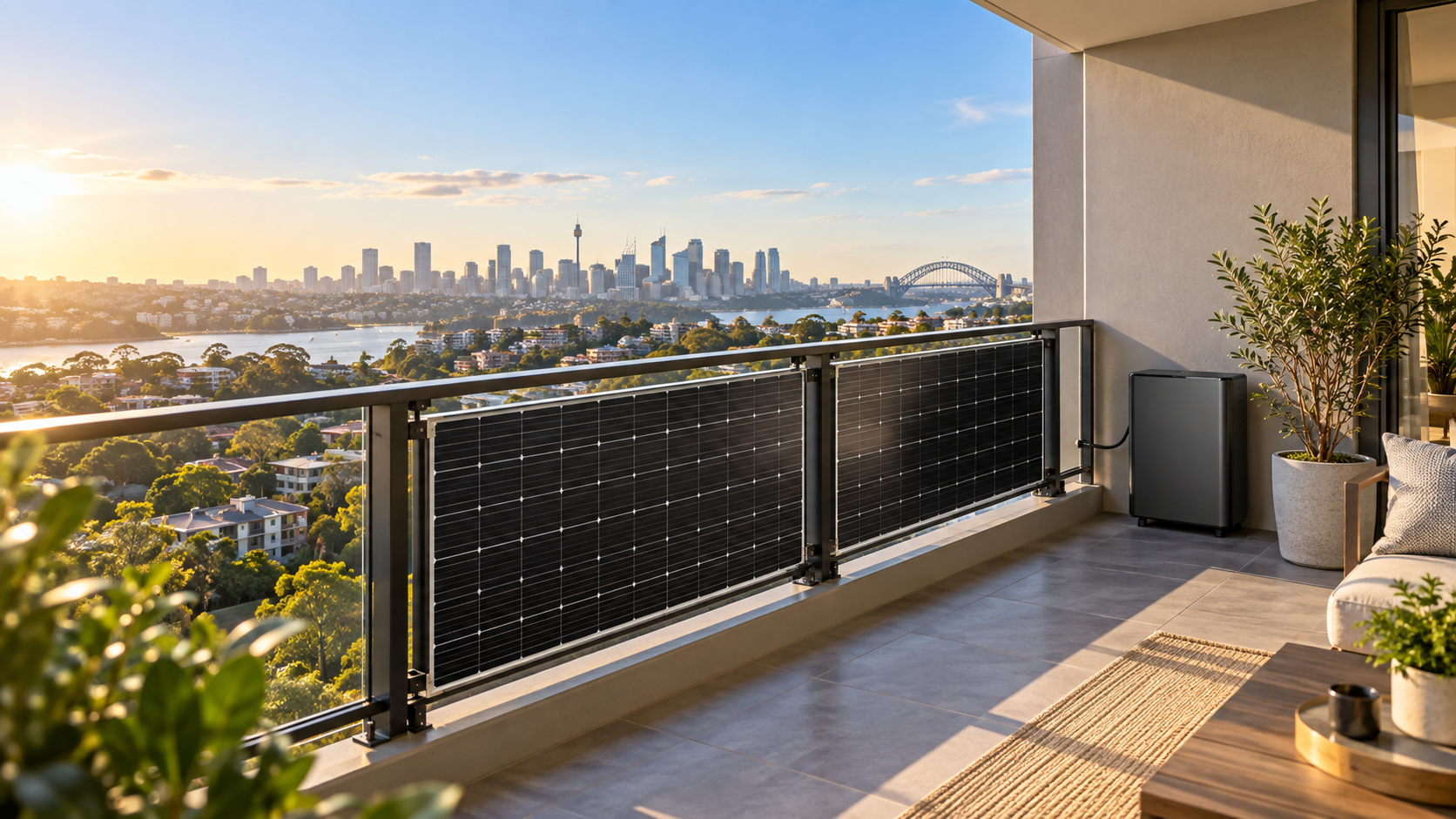
Australia may soon enter a new era of affordable and portable renewable energy. Plug-in solar panels and battery systems—also known as balcony solar, portable solar or plug-and-play solar—are already popular overseas and are now being considered for legal use across Australia.
These compact systems could give renters, apartment residents and households without a suitable roof an easier way to generate and store their own electricity.
Federal, state and territory energy ministers have agreed to investigate how plug-in solar panels and batteries can be safely introduced. Although these systems are not yet approved for general plug-in use in Australia, the regulatory process is progressing.
Solar Link Australia is closely monitoring these developments and preparing to offer safe, compliant and carefully selected plug-in solar and battery solutions once the Australian requirements are finalised.
What is a plug-in solar system?
A plug-in solar system is a small-scale solar power system designed to operate without a conventional rooftop installation.
A typical system may include:
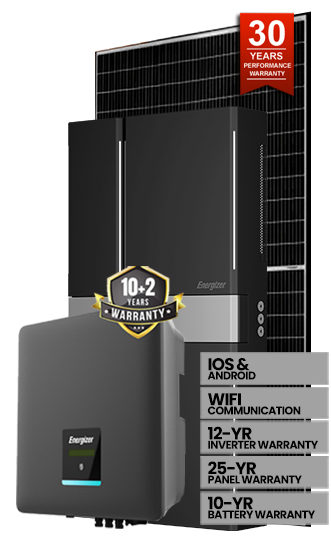
- One or two solar panels with a combined capacity of approximately 600–800 watts
- A compact microinverter that converts solar DC electricity into household AC electricity
- A dedicated connection cable
- Balcony, wall, courtyard or ground-mounting equipment
- An optional portable battery for storing excess solar energy
The solar panels generate electricity during daylight hours. That energy is converted by the inverter and supplied to the home, helping offset electricity used by appliances such as refrigerators, televisions, computers and washing machines.
In overseas markets, appropriately approved systems can be connected through a suitable household power outlet. Australia must first establish the necessary product, electrical-safety, installation and grid-connection requirements before this can legally occur here.
Who could benefit from plug-in solar?
Plug-in solar could open the benefits of renewable energy to millions of Australians who have previously been unable to install conventional rooftop solar.
The technology may be particularly suitable for:
- Apartment and unit residents
- Renters who want a portable energy solution
- Homes with heavily shaded or unsuitable roofs
- Residents who cannot obtain approval for rooftop solar
- People looking for an affordable entry point into solar energy
- Households with relatively low daytime electricity consumption
Because the equipment may be portable, renters could potentially take their system with them when moving home, subject to future regulations and any required landlord or owners-corporation approval.
How much could plug-in solar save?
An 800-watt plug-in solar system will not produce as much electricity as a conventional 6.6 kW or 10 kW rooftop solar system. However, it may still make a noticeable contribution towards reducing daytime electricity purchases.
Independent estimates suggest a well-positioned plug-in solar system could potentially save an Australian household approximately $200–$400 per year.
Actual solar savings would depend on:
- Solar-panel orientation and exposure to sunlight
- Balcony or courtyard shading
- Local weather conditions
- Household electricity rates
- How much electricity is used during the day
- System output and efficiency
- Whether a compatible battery is included
Households that operate appliances while their solar panels are generating will generally receive the greatest benefit. A plug-in battery could potentially store surplus daytime electricity for use during the evening, although the financial return would depend on the battery’s price, usable capacity and efficiency.
What are the benefits of plug-in solar and batteries?
The main benefit of plug-in solar is accessibility. Conventional rooftop solar normally requires property ownership or permission from a landlord or owners corporation, a suitable roof and professional electrical installation.
Plug-in solar and battery systems could provide:
- Lower upfront costs than conventional rooftop solar
- Reduced daytime grid electricity consumption
- Access to solar for renters and apartment residents
- Compact and potentially portable equipment
- Simple energy monitoring through a mobile application
- Optional battery storage for evening use
- Reduced household carbon emissions
- An affordable entry point into home energy management
These systems may also assist the wider electricity network by reducing demand. Where permitted, batteries could charge when renewable electricity is plentiful and discharge during higher-demand periods.
Are plug-in solar systems currently legal in Australia?
Plug-in solar systems are not yet approved for general connection through an ordinary Australian power point.
Products may be advertised or sold as portable solar equipment, but consumers should not assume they can legally connect them to a household electrical circuit.
Governments and industry bodies must first address important issues including electrical protection, grid disconnection, export control, product certification, mounting security, battery safety and the suitability of existing household circuits.
Balcony solar installations must also account for wind loading and the risk of panels or mounting components falling from height. Landlord or owners-corporation approval may still be required because balconies, façades and railings can form part of a building’s common property.
Consumers should avoid purchasing unapproved plug-in solar systems online or connecting equipment designed for overseas electricity networks.
Why choose Solar Link Australia?
Solar Link Australia has been operating in the Australian renewable-energy industry since 2010. We supply and install residential solar, commercial solar, home batteries and off-grid energy systems across Australia.
When plug-in solar and battery systems receive the necessary Australian approvals, choosing an experienced renewable-energy provider will remain important. A low purchase price means little if the system is unsafe, unsuitable or unsupported.
Solar Link Australia will focus on solutions offering:
- Compliance with applicable Australian standards and regulations
- Reputable manufacturers with Australian warranty support
- Safe and secure mounting options
- Appropriate electrical and grid protection
- Clear product documentation
- Realistic energy-saving estimates
- Reliable technical and after-sales support
- A pathway to larger rooftop solar or home battery systems
We will not recommend a plug-in solar or battery product until we are satisfied that it can be used safely and legally in Australia.
Register your interest in plug-in solar
Plug-in solar panels and batteries could become an exciting new option for Australian renters, apartment residents and households currently excluded from conventional rooftop solar.
Solar Link Australia is monitoring the regulatory process and reviewing potential products from established manufacturers. If you would like to know when compliant plug-in solar and battery systems become available, contact Solar Link Australia and register your interest today.
Our team can also assess whether conventional rooftop solar, a home battery, apartment shared solar or a customised off-grid system may already provide a better solution for your property.
Contact Solar Link Australia on 1800 155 597 or visit www.solarlinkaustralia.com.au to discuss your energy requirements.